
Hi, my name is Dr. Rizvi with My Dentist For Life in Plantation, Florida, and we get a lot of questions about sleep apnea. Today, I'm going to take the time to answer some of the most commonly asked questions regarding sleep apnea.
What is sleep apnea?
Sleep apnea is a sleep disorder in which you stop breathing for a short period of time in your sleep. It could be for a few seconds all the way up to a few minutes, and you may not even notice it.
Who is at risk for sleep apnea?
People who are at risk for sleep apnea include those who are overweight, have a family history of sleep apnea, or engage in smoking and drinking. Nasal congestion, a deviated septum, enlarged tonsils and adenoids, and a small jaw can also increase the risk.
How does sleep apnea affect my oral health?
From a dental perspective, sleep apnea can increase teeth grinding and cause TMJ disorders. It can also lead to dry mouth as patients try to get as much oxygen in their bodies, causing the mouth to open, which drops the pH and can lead to dental cavities and gum disease.
How can a dentist help diagnose and treat sleep apnea?
A dentist can help diagnose and treat sleep apnea because, in our office, we have the capability to take an airway CT to determine the constriction of one's airway. I can also order a sleep study test.
What treatment options might a dentist recommend for sleep apnea?
We recommend a lot of alternative therapies, such as myofunctional therapy. We also have NightLase, a laser treatment to help tighten the loose tissues at the back of the throat. Additionally, we offer oral appliances.
Can oral surgery help me cure sleep apnea?
Yes, some services can help with sleep apnea. However, in our office, we strictly stick to a non-surgical approach, but we have specialists in this field whom I can refer to for treatment.
What appliances do dentists recommend for sleep apnea?
There are two major appliances that we recommend to treat sleep apnea. One is a mandibular advancement device, which repositions your lower jaw forward to prevent obstruction from your jaw or tongue. The second option is a Vivos appliance, which enlarges the arches and makes room for your tongue, providing a more permanent fix.
I hope I was able to answer all of your questions regarding sleep apnea. If you have any additional questions or are ready to take action, please give us a call at (954) 833-4998. We're here to help you.
We’re concerned about the overall health of our patients, including their sleep health. Many people suffer needlessly from dangerous sleep disruptive disorders that keep them from getting enough oxygen at night. The risk of a heart attack is 23 times more likely than average with a sleep disorder, and 92% of stroke victims live unknowingly with this condition before an attack. Our training allows us to offer you education and treatment surrounding sleep health in the simplest and most cost-effective way possible.
Estimates suggest that more than twelve million Americans compromise their health due to obstructive sleep apnea (OSA). Most cases remain undiagnosed, contributing to diabetes, high blood pressure, hypertension, congestive heart failure, coronary artery disease, and traffic accidents related to drowsy driving. Dentistry serves a vital role in treating this silent epidemic. The American Academy of Sleep Medicine recommends oral appliances as a primary therapy for treating mild to moderate obstructive sleep apnea and for patients with severe sleep apnea who can’t tolerate CPAP treatment.
What Is OSA?
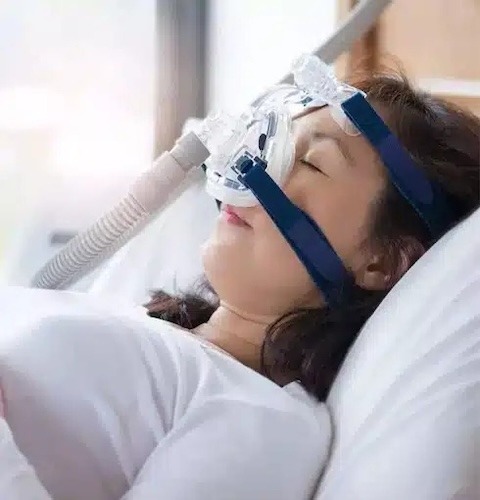
OSA is a breathing disorder characterized by brief interruptions of breathing during sleep due to a blockage in the airway. Obstructions occur when throat muscles, tongue, tonsils, or the soft palate falls back into the throat. The obstruction results in a severe drop in blood oxygen levels throughout the night.
OSA is typically diagnosed using a polysomnogram or a sleep study. During a sleep study, a sleep physician monitors brain activity and body system functioning while a patient rests overnight at a sleep lab. The specialist evaluates the study data collected to diagnose sleep disorders and recommend treatment. If indicated by the sleep doctor, a dentist trained in sleep medicine works with him/her to treat obstructive sleep apnea with oral appliance therapy. In some cases, a home sleep study may also be possible instead of reporting to a sleep lab.
How is OSA Treated?
Treatment of snoring and obstructive sleep apnea may involve surgery, CPAP or BiPAP machines, or oral appliance therapy. Oral appliances provide the least invasive option and are often a good choice for the treatment of mild to moderate OSA. A carefully calibrated appliance can comfortably help hold the jaw in a precise position throughout the night, allowing critical oxygen flow.
All treatment recommendations should be made in consultation with your sleep physician. Once a treatment path that you can use consistently is chosen, My Dentist For Life Of Plantation may be able to provide critical support for your efforts. If appliance therapy is selected, it’s essential the right method and positioning are designed to precisely maintain your airway.
Welcome to Our Dental Family
My Dentist For Life Of South Florida is accepting new patients of all ages. We offer a full suite of services, including breathtaking, customized smile makeovers. Call today to schedule an appointment!